Oil just hit a ten-week low. Here's why the Bank of Canada is watching
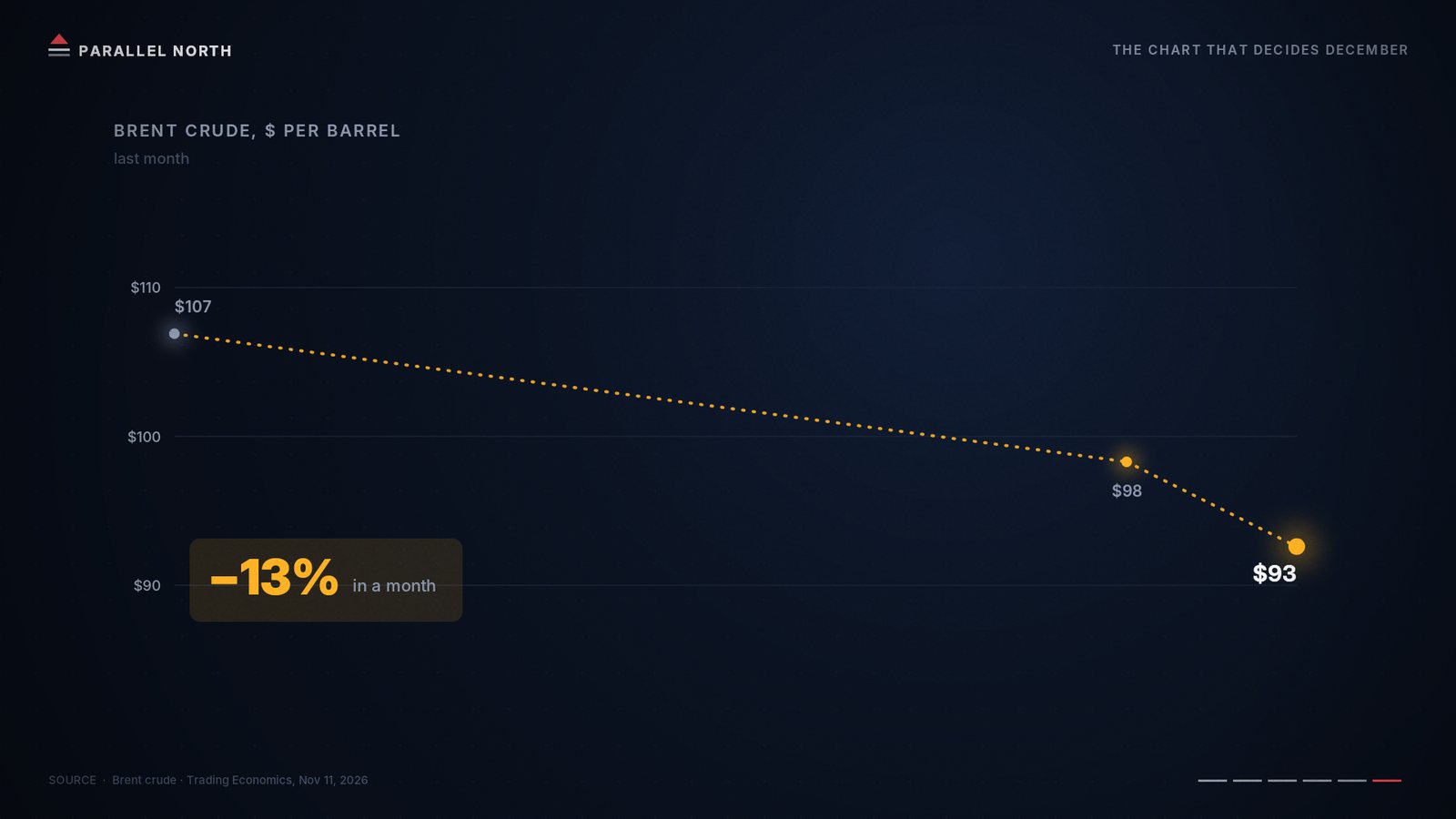
Brent is down about 13% in a month. The energy shock behind the Bank of Canada's hike is starting to fade, but it hasn't gone away.
Brent crude slid to its lowest level in ten weeks this week. It settled near $92.60 a barrel on November 11, down about 13% from a month earlier (Trading Economics).
For most of this year, oil has been the single biggest force behind central bank decisions, including the Bank of Canada’s.
How we got here
When the Strait of Hormuz was effectively shut this spring, Brent spiked to around $118 in late March (Wikipedia: 2026 Iran war fuel crisis). It eased over the summer, then jumped back to $110 in mid-October after renewed attacks on shipping (CNBC).
Since then, supply has been doing more of the talking. According to Trading Economics’ market summary, Saudi crude output rose 26% in October to 10.56 million barrels a day, and US crude inventories rose by about 9 million barrels in the latest week, based on American Petroleum Institute data. Risks haven’t disappeared: the same summary notes Iran has denied that negotiations are under way, and that drone strikes have disrupted Russian refineries (Trading Economics; secondary summary).
Why the Bank of Canada cares
The Bank raised its policy rate to 2.5% on October 28 because of energy, not because the economy was running hot. On November 5, Governor Tiff Macklem told the Senate banking committee that “the prices of gasoline, diesel and heating oil are elevated and are expected to remain higher for longer.” He said CPI inflation is expected to rise to about 3½% by year-end, and that the Bank “could” need to raise rates further but would “proceed carefully” (Bank of Canada).
A sustained drop in oil would take pressure off that outlook. Pump prices follow crude with a lag, so it would take weeks to show up in the inflation data.
What to watch
The first test is October’s Consumer Price Index on November 16. It won’t capture this month’s drop in crude, but it will show whether energy costs were spreading into other prices before the hike. The Bank’s next decision is December 9 (Statistics Canada release calendar).
Episode 1, out Saturday, looks at the last time a major central bank hiked into an oil spike, and how quickly it had to reverse.